AI-Powered
Customer
Segmentation
Designing Conversational AI Experiences to Transform Sales Training at Cox Business
Personas
Conv. Paths
Surveyed
Cox Business launched a customer segmentation strategy designed to help sales representatives personalize conversations based on customer needs, motivations, and buying behaviors. However, traditional training methods lacked opportunities for sellers to practice these conversations in realistic environments.
As lead AI Experience Designer and Conversation Designer, I designed and developed a suite of nine AI-powered conversational simulations using Surge9. Each simulation featured dynamic AI personas capable of replicating authentic customer interactions across multiple industries, allowing sellers to safely practice consultative selling skills in a scalable, on-demand environment.
Sales representatives needed a better way to practice customer conversations before engaging with real clients. Existing training solutions presented several challenges:
- Training focused heavily on knowledge transfer but offered limited opportunities for skill application.
- Live role-play exercises were difficult to scale and often inconsistent.
- Sellers struggled to adapt their communication styles to different customer personalities and buying behaviors.
- Managers lacked scalable methods for providing consistent coaching and feedback.
- The organization needed a way to reinforce customer segmentation strategy through realistic practice experiences.
How might we use AI to create authentic, scalable customer conversations that improve seller confidence and performance?
This project was heavily research-driven. Findings revealed that successful sellers adapt not only their solutions, but also their communication style, pacing, technical depth, and relationship-building approach. Each customer segment demonstrated unique emotional drivers, fears, and decision criteria. These findings directly informed the AI behavior models.
- Sales leaders
- Customer segmentation experts
- Subject matter experts
- Change management teams
- Sales enablement leaders
- Customer segmentation research
- Survey data from 1,200+ customers
- National customer datasets
- Existing customer personas
- Sales performance insights
- Communication style
- Pacing and technical depth
- Relationship-building approach
- Emotional drivers and fears
- Decision criteria
- Buying behaviors
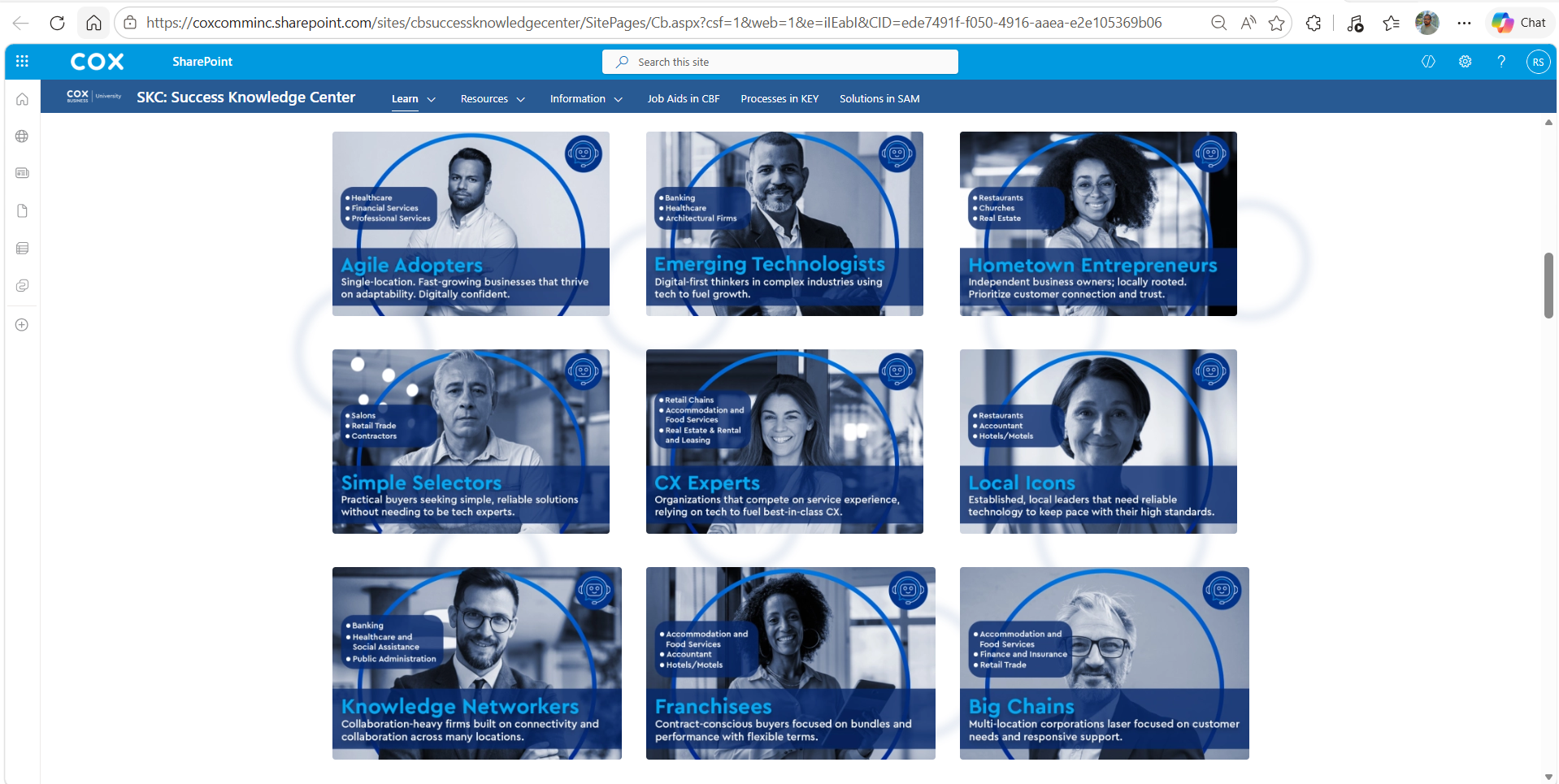
I designed an AI-driven learning ecosystem consisting of nine customer personas, each representing a distinct business segment. The solution moved through four interconnected design phases, culminating in a fully integrated learning experience that extended beyond the simulations themselves into how learners discovered, accessed, and revisited the content.
AI Persona Design
Each of the nine AI personas was built as a fully realized character, not a template. I developed detailed behavioral profiles containing background stories, personality traits, emotional drivers, professional goals, pain points, buying behaviors, and conversation styles. The goal was for each persona to feel like a real person a seller might encounter in the field.
Conversation Design
I developed conversational frameworks that enabled AI personas to behave dynamically rather than following a script. Each simulation could ask realistic follow-up questions, challenge weak recommendations, demonstrate objections, adapt its tone based on the learner's responses, and simulate authentic customer behaviors. The conversations branched naturally based on seller performance.
Prompt Engineering
Designing the AI personas was only half the work. Getting them to behave consistently required careful, iterative prompt engineering. I authored and continuously refined prompts to ensure each AI persona stayed in character, reflected segment-specific behaviors, avoided hallucinations, and delivered consistent evaluations. Multiple iterations were tested and refined based on stakeholder feedback.
Evaluation Framework
Each simulation provided immediate, AI-generated performance feedback that evaluated learners across six consultative selling competencies. I developed custom scoring models that assessed not just whether sellers got the right answer, but how they engaged, how they listened, and how well they connected solutions to customer needs. This allowed for meaningful, consistent coaching at scale.
Learning Hub Design
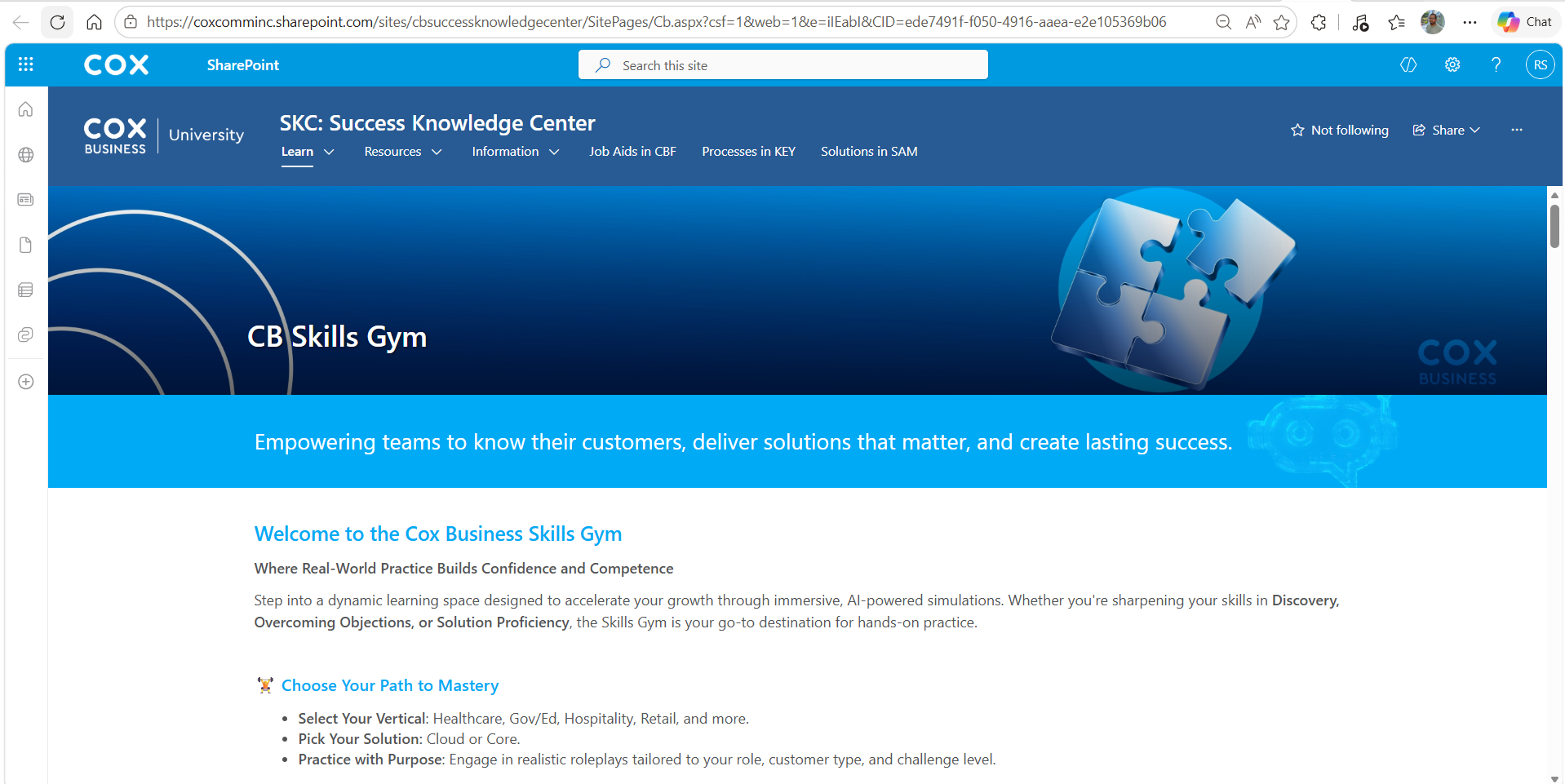
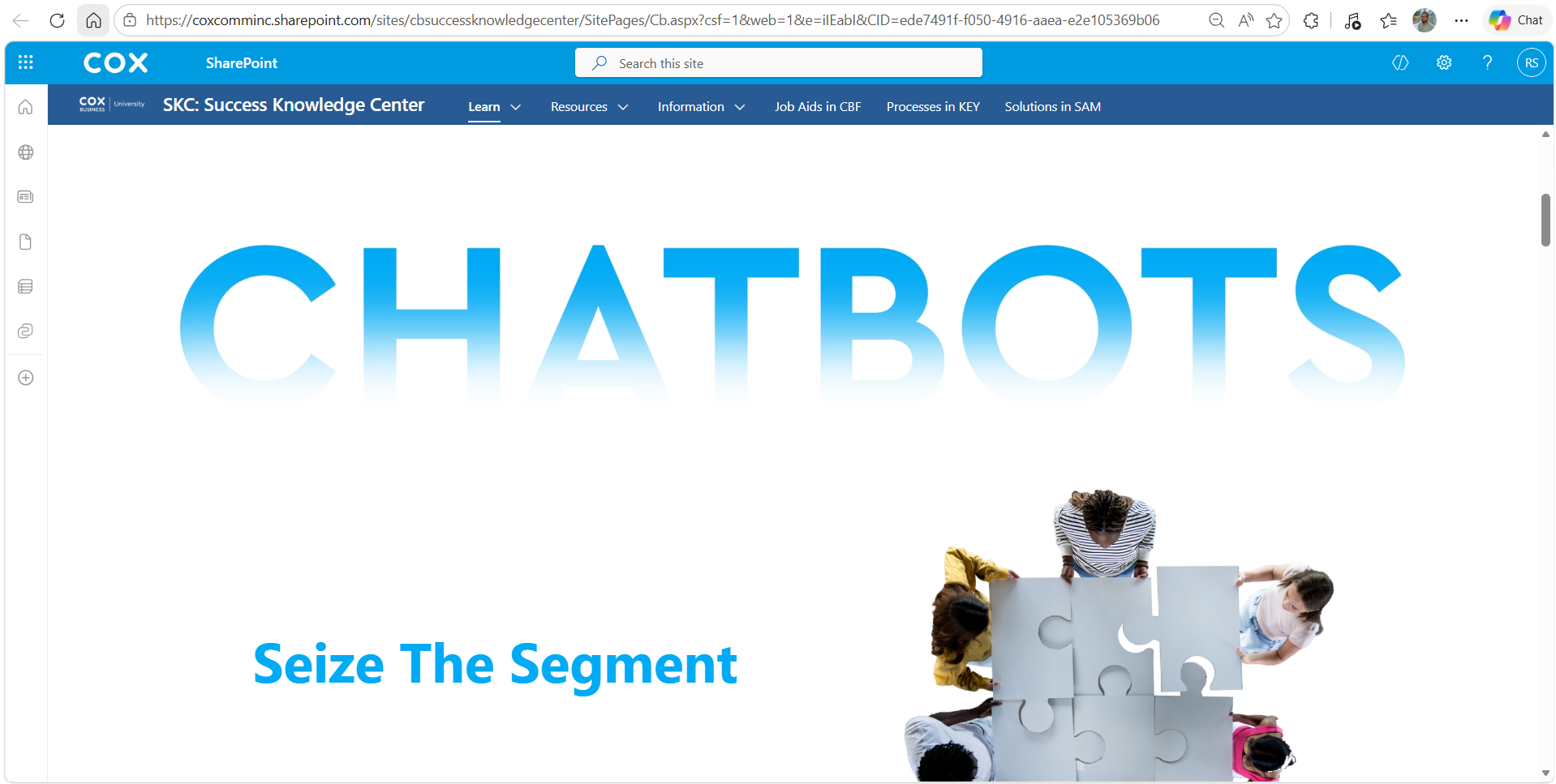
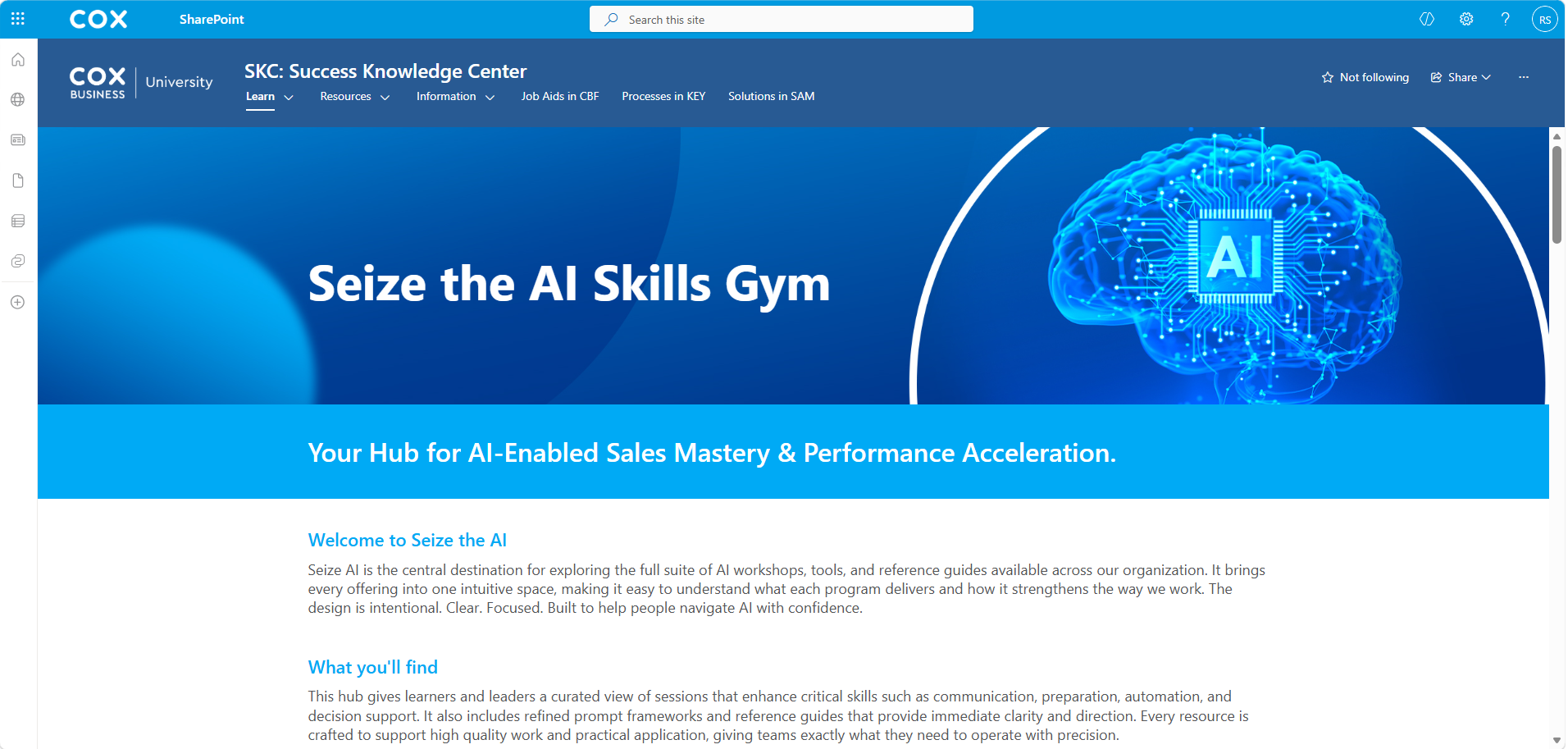
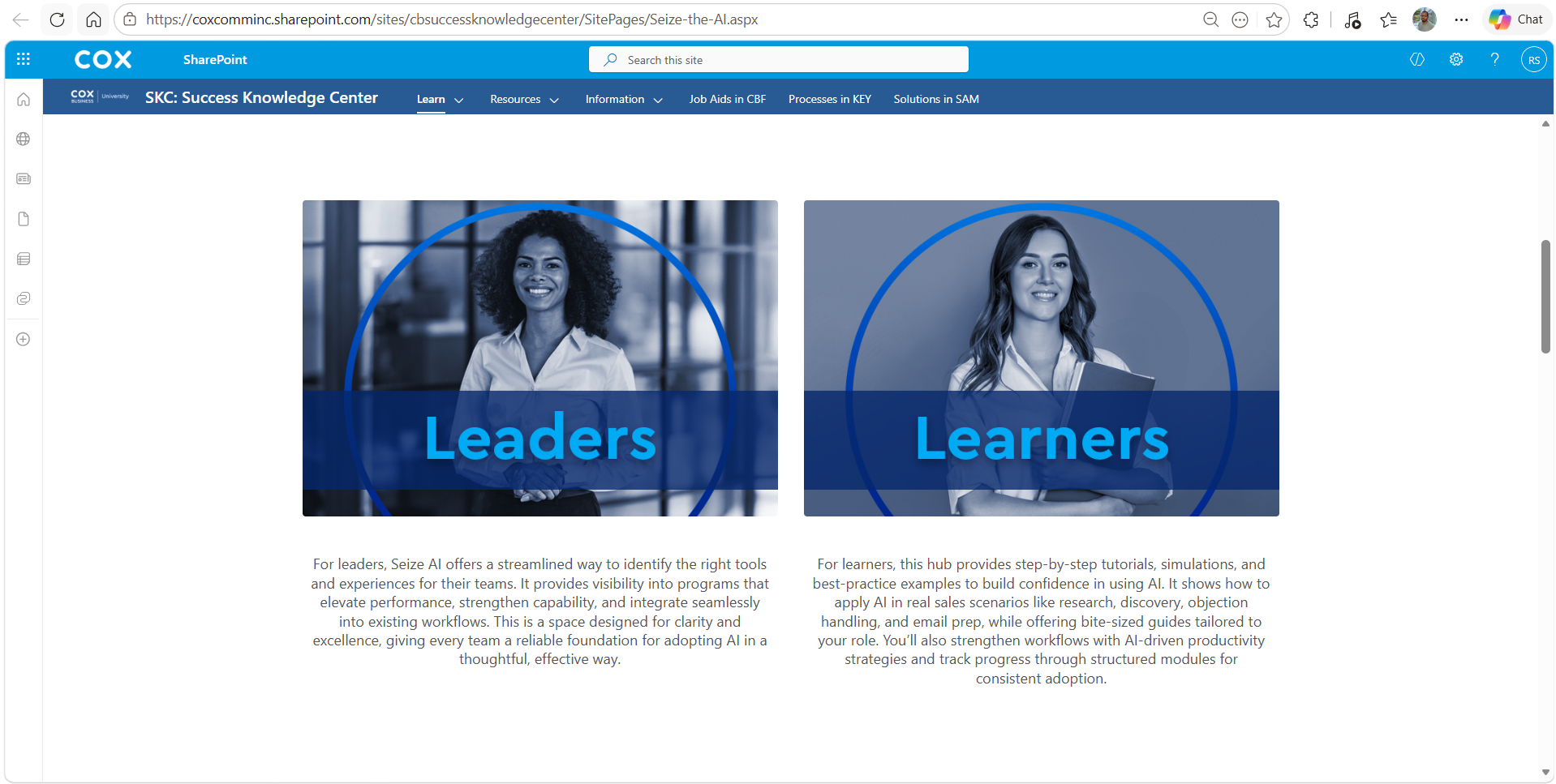
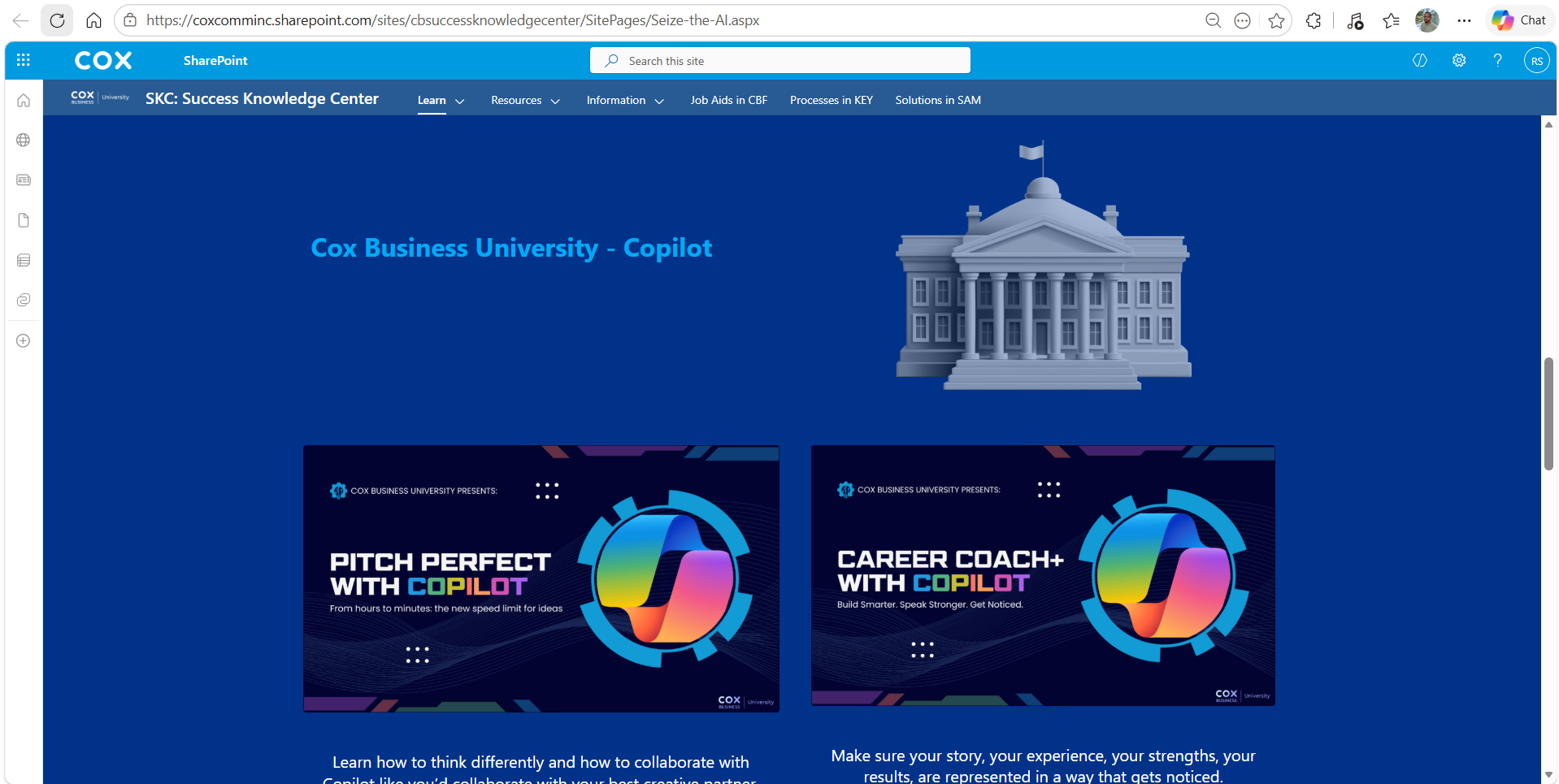
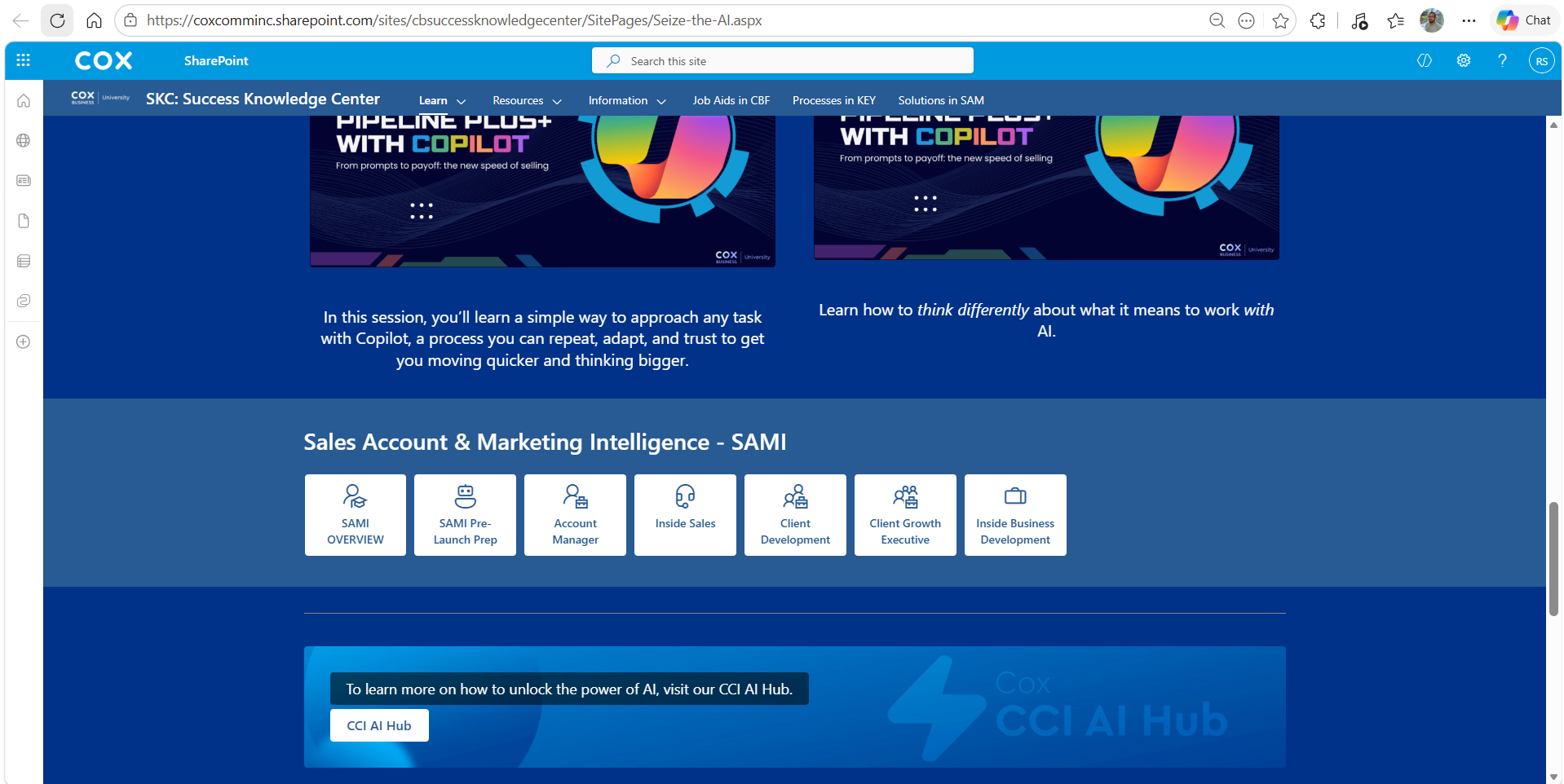
To ensure learners could easily discover, access, and revisit the AI simulations, I designed a SharePoint-based learning hub that served as the central entry point for all segmentation resources. The hub housed the AI simulations, explainer videos, segment reference materials, and supporting documentation in a single, easy-to-navigate experience. The design prioritized clarity, low friction, and visual consistency with Cox Business brand standards.
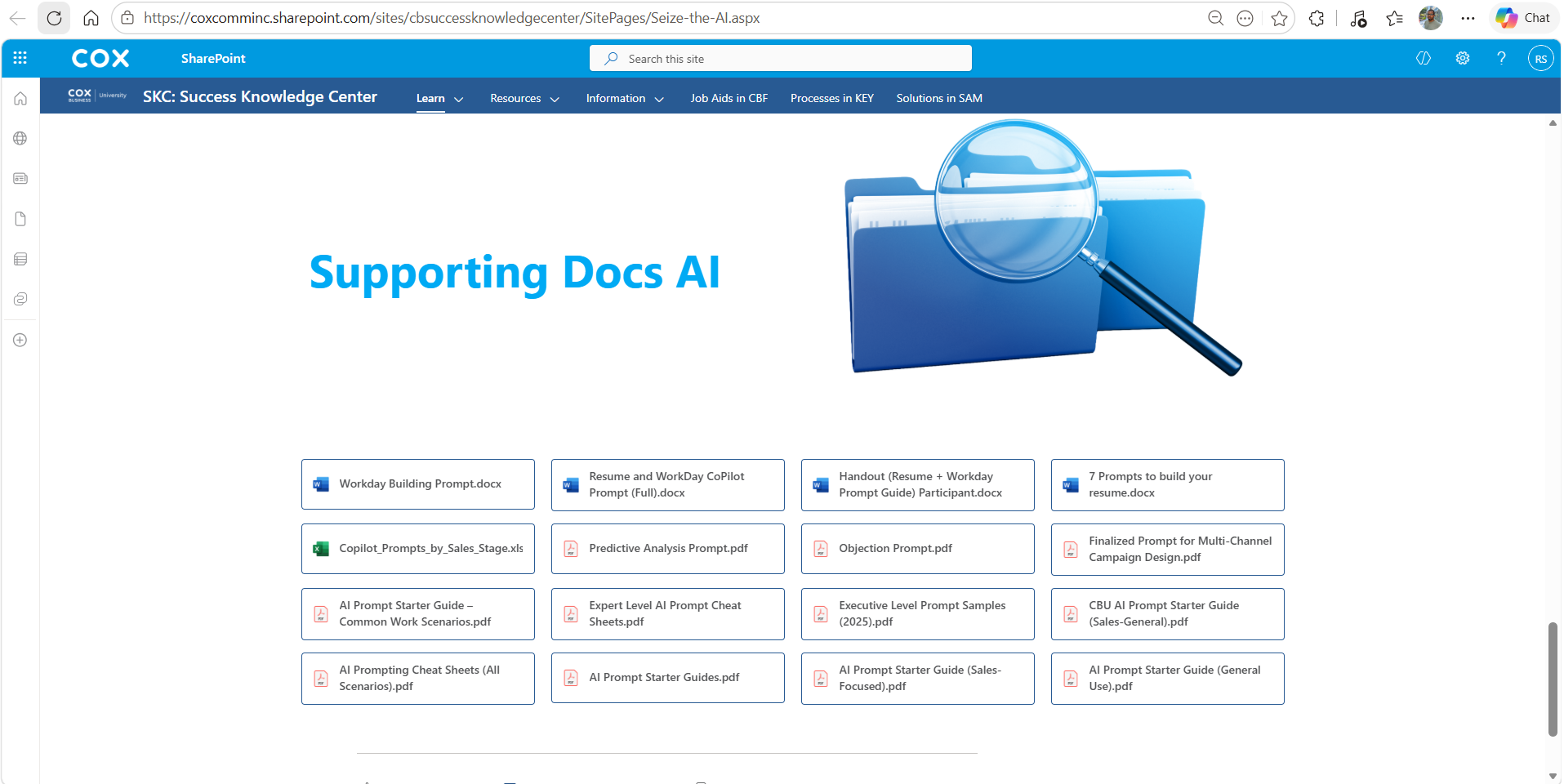
Every phase of this project surfaced real constraints that required creative problem-solving and iterative refinement.
AI Evaluation Accuracy
Early testing revealed inconsistencies in AI scoring and feedback. Learners occasionally received high scores despite missing critical customer needs.
Refined evaluation prompts and introduced stricter performance criteria through multiple testing cycles.
Stakeholder Alignment
Multiple stakeholders across sales and enablement teams required ongoing feedback and sign-off throughout development.
Established recurring review sessions and iterative testing cycles to maintain alignment at every stage.
Evolving Requirements
Industry assignments changed late in development as new customer data became available, threatening the existing architecture.
Built a modular conversation architecture that allowed industries to be swapped without rebuilding entire simulations.
Balancing Complexity
The simulations needed to support both novice and experienced sellers without creating dead-ends or oversimplified conversations.
Designed AI conversations to scale naturally in difficulty while avoiding technical dead-ends for any skill level.
The project delivered a complete, scalable AI-powered training ecosystem that the organization had never had before. Although formal business metrics are still being collected, the immediate value and organizational impact were clear.
The next best thing to a live customer conversation.
Stakeholder Feedback · Cox Business Sales Enablement- Faster seller ramp time
- Improved customer conversations
- Increased seller confidence
- Reduced coaching time
- Scalable practice opportunities
- Lower training delivery costs
- Outside Sales expansion
- Indirect Sales applications
- Additional customer segments
- Future AI coaching initiatives
This project fundamentally changed how I think about learning design. Rather than designing content, I was designing conversations. Success depended not on information delivery, but on creating authentic interactions between humans and AI.
Protecting Client Confidentiality
Throughout my career, I’ve partnered with organizations across healthcare, financial services, technology, and telecommunications to design learning experiences, digital products, and communication campaigns.
Because much of this work contains proprietary information, internal processes, or confidential business content, the portfolio examples presented here have been selectively edited. Rather than displaying complete courses or full project deliverables, I’ve included representative sections that demonstrate my design thinking, creative approach, and technical execution while honoring the confidentiality and trust of the organizations I’ve worked with.
Protecting client information is just as important as showcasing my work.